Article
Jev: The Most Talked-About AI Model of 2026 Doesn't Say a Word
TypeSafe AI came out of stealth with $40M and a model that can't write a sentence. Three days later it was the fastest-adopted model in Vercel's AI Gateway history. Here's what Jev actually does, what the benchmarks leave out, and the four places I'd put it first.

The most talked-about AI model of September 2026 has never written a sentence. It cannot summarize your inbox, refactor your code, or hold a conversation. You ask it a question and it hands back a number.
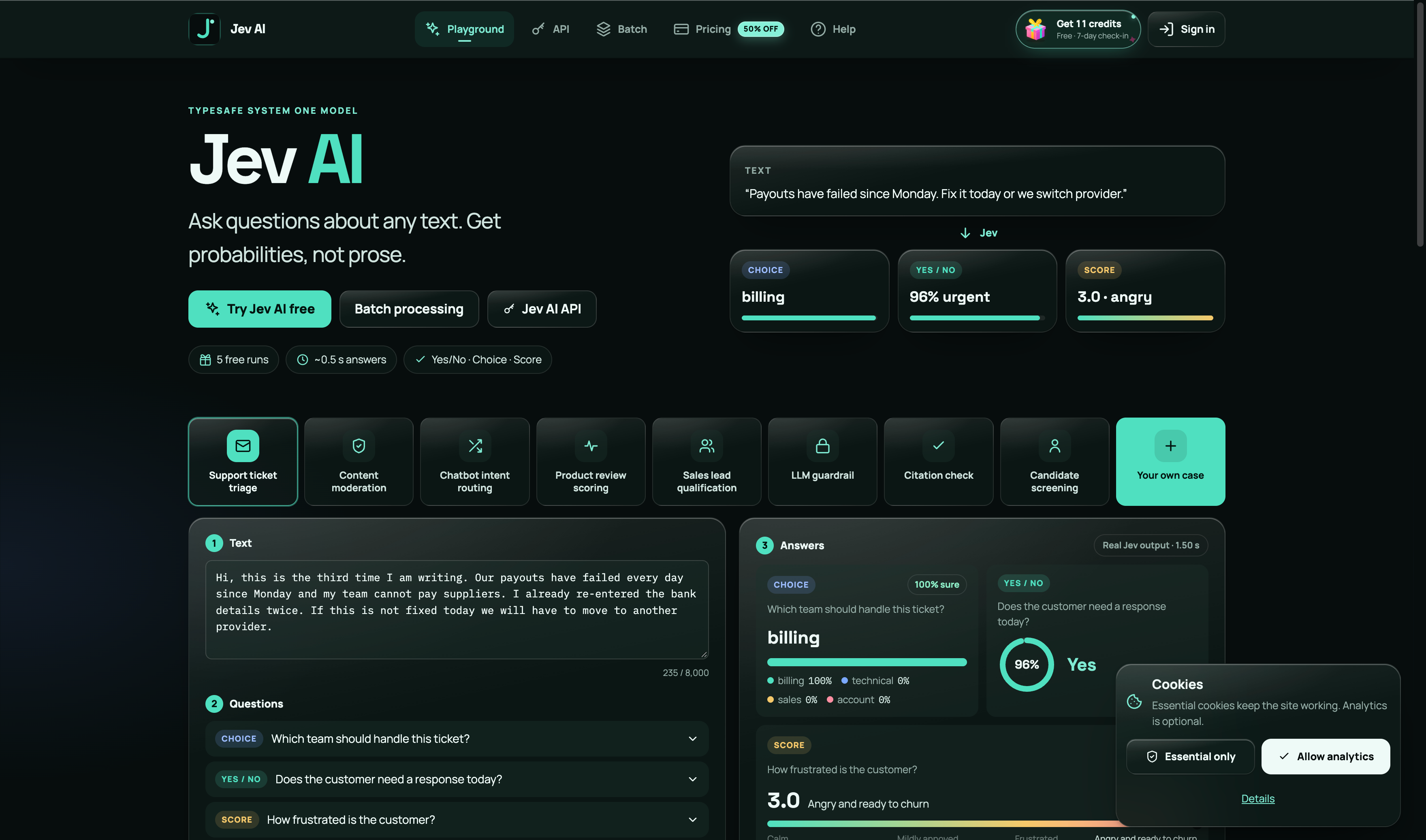
Three days after launch it became the fastest-adopted model in Vercel’s AI Gateway history — used by roughly 13% of paid teams within 24 hours, about 2x the uptake of the GPT-5.6 family and 6x that of Fable 5.1. Cloudflare, LangChain, and Langfuse all shipped integrations in the same week. Developers started posting demos of it playing Doom, racing through Wikipedia, and booking a Zürich–London flight in seven seconds.
Its name is Jev. The reason it matters isn’t that it’s smart. It’s that it’s cheap enough and fast enough to be everywhere.
What actually shipped
On September 15, 2026, TypeSafe AI emerged from roughly two years of stealth with an announced $40 million seed round led by DCVC, and a first model it calls a System One Model.
The founders are Diogo Almeida (CEO), Erik Gafni (CTO), and Sasha Sheng (COO). Almeida is the name that drove the launch coverage: a former OpenAI researcher and a co-author of the InstructGPT paper — the work that brought RLHF to ChatGPT and arguably defined the last four years of the industry.
Which makes his pitch unusually pointed: he spent those years watching RLHF work and concluded it was solving the wrong problem. “We have lightning in a bottle,” as he puts it, “and yet it is not useful.”
His diagnosis, from the TechCrunch launch piece:
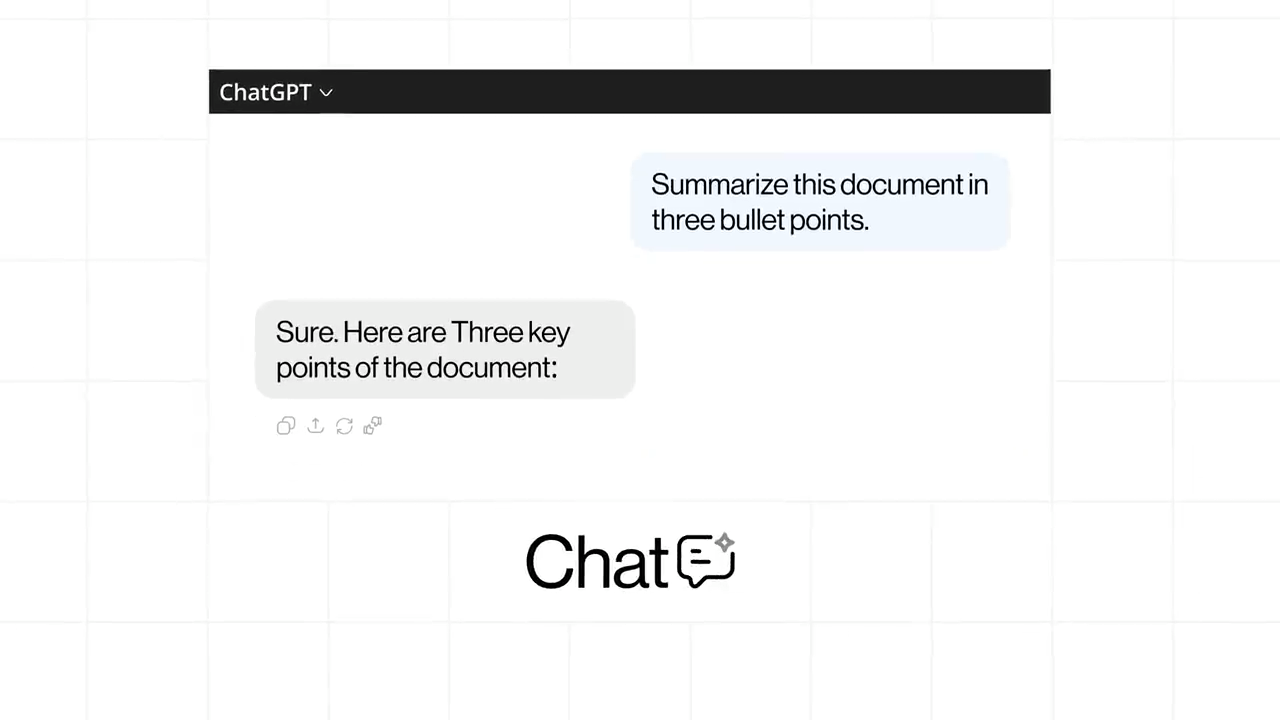
“The problem is we are optimizing for human language … We have been super good at human language for four years, but it’s not useful for automation because computers speak a different language.”
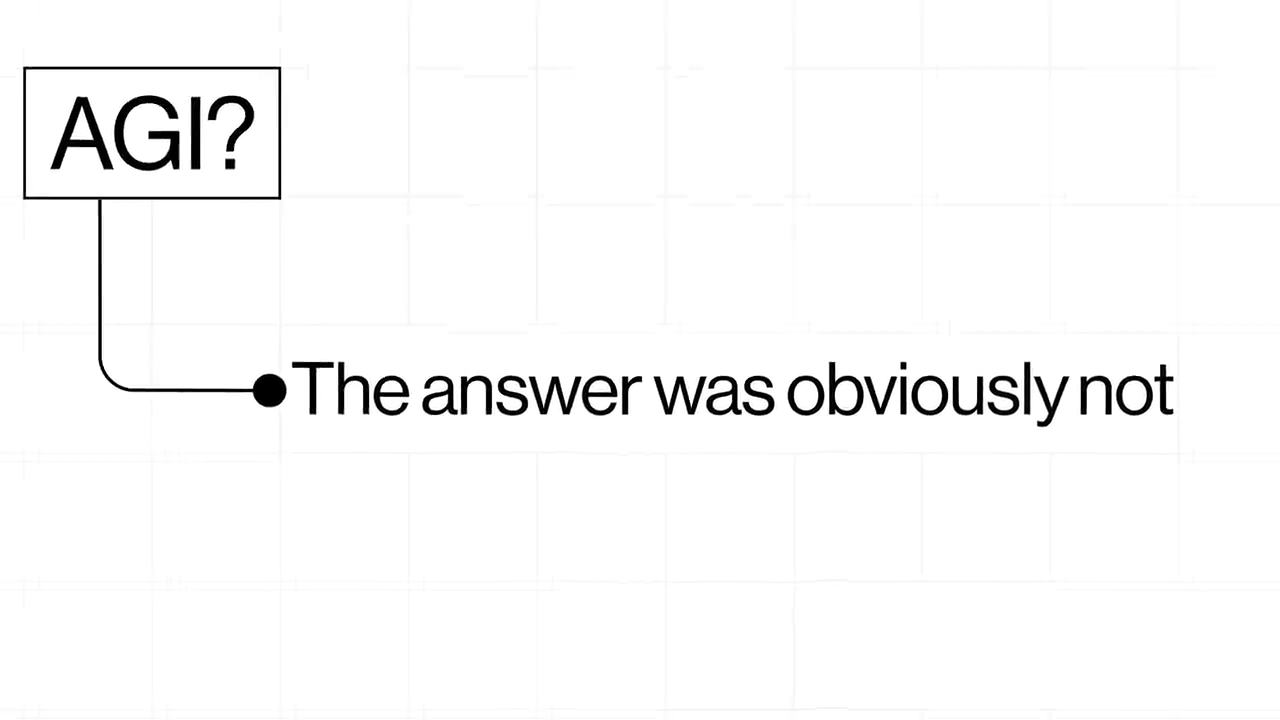
That’s the whole bet in one sentence. Every frontier lab is racing to make models better at producing prose. But most production AI isn’t producing prose — it’s making a small decision inside a loop. Route this ticket. Is this tool call risky. Which of these 40 buttons do I click. Does this chunk belong in context.
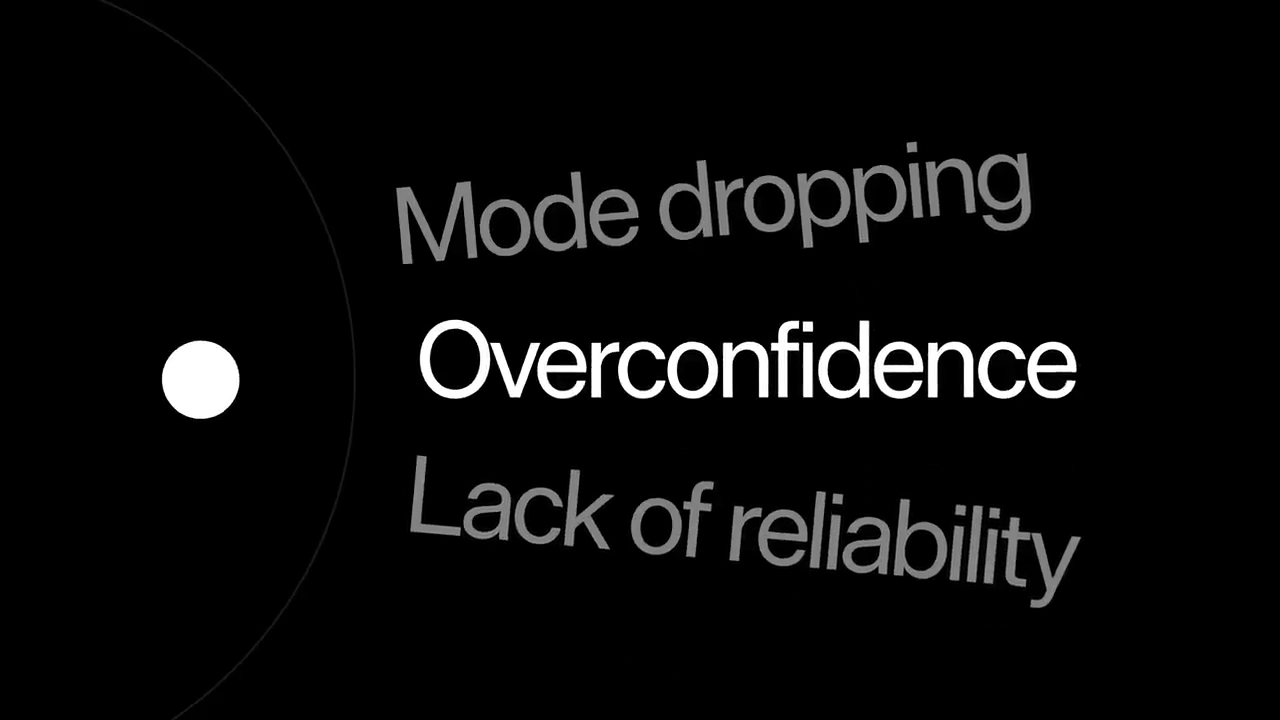
For those jobs, a chat model generates a paragraph of reasoning, wraps a JSON object in a Markdown fence, and bills you for every token on the way out. Jev skips the paragraph.
How Jev actually works
The mental model is simpler than prompting. You POST a state — any unstructured blob of context — plus a map of questions about it. You get back typed answers with probability distributions and a calibrated confidence score.

There are exactly three question primitives:
| Type | What it does | What comes back |
|---|---|---|
| Noul | A yes/no judgement | A number from 0 to 1 — the probability the statement is true |
| Choice | Pick one of up to 255 options | The selected option, a probability for every option, and a confidence score |
| Score | Rate against 2–10 ordered levels | A continuous probability-weighted value, the distribution, and confidence |
Here is the Cloudflare-hosted version, which is the shortest way to see the shape of it:

const response = await env.AI.run('typesafe/jev', {
  state: 'Help! My payouts have been failing for 3 days.',
  questions: {
    is_urgent: {
      type: 'noul',
      instructions: 'Does this convey urgency?',
      criteria: {
        true: 'Explicitly time-sensitive',
        false: 'No urgency expressed'
      }
    }
  }
})
The request is the boring half. What comes back is the point — and it isn’t an answer. It’s how sure Jev is, and where the rest of the probability went.
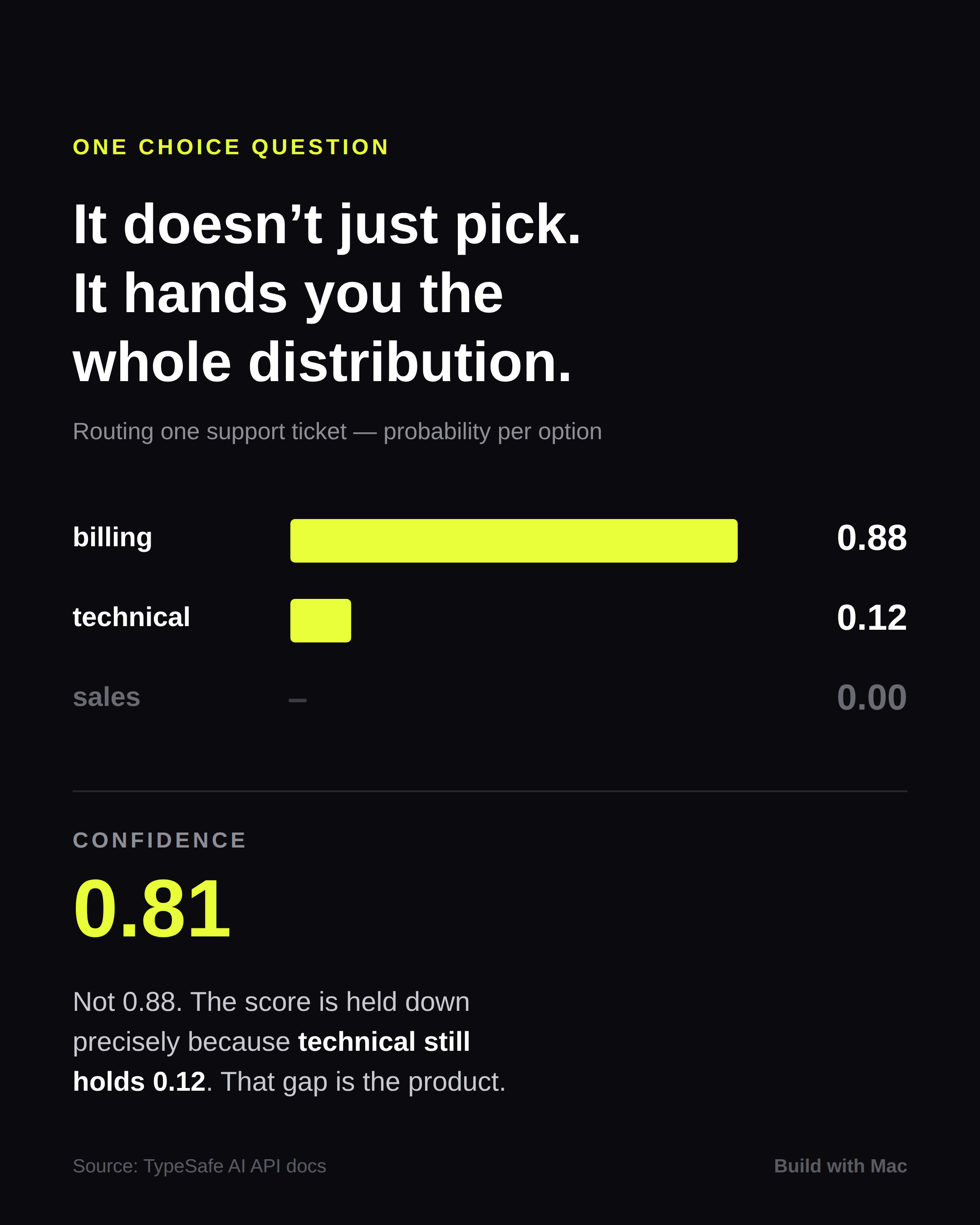
Take the department question. Jev didn’t just pick “billing” — it returned 0.88 for billing, 0.12 for technical, and a confidence of only 0.81 because technical still holds meaningful mass. That gap is the whole product. A chat model would have said “billing” in a confident sentence and told you nothing about the 12%.
Here is the raw response those numbers come from. TypeSafe’s docs use a fuller three-question example, so all three primitives answer the same state at once:
{
  "model": "jev-1.13.0",
  "answers": {
    "is_urgent": {
      "type": "noul",
      "noul": 0.95
    },
    "department": {
      "type": "choice",
      "choice": "billing",
      "probabilities": { "billing": 0.88, "technical": 0.12, "sales": 0.0 },
      "confidence": 0.81
    },
    "frustration": {
      "type": "score",
      "score": 1.05,
      "legend": { "0": "Calm", "1": "Frustrated", "2": "Very angry" },
      "probabilities": { "0": 0.0, "1": 0.95, "2": 0.05 },
      "confidence": 0.92
    }
  },
  "usage": { "input_tokens": 304, "output_tokens": 18 }
}
Note output_tokens: 18. That is why output is free.
No JSON-mode prompt. No output parser. No retry loop for the day the model decides to wrap your object in a Markdown code fence. The schema is the contract, and TypeSafe’s claim is that the model “never makes type errors.”
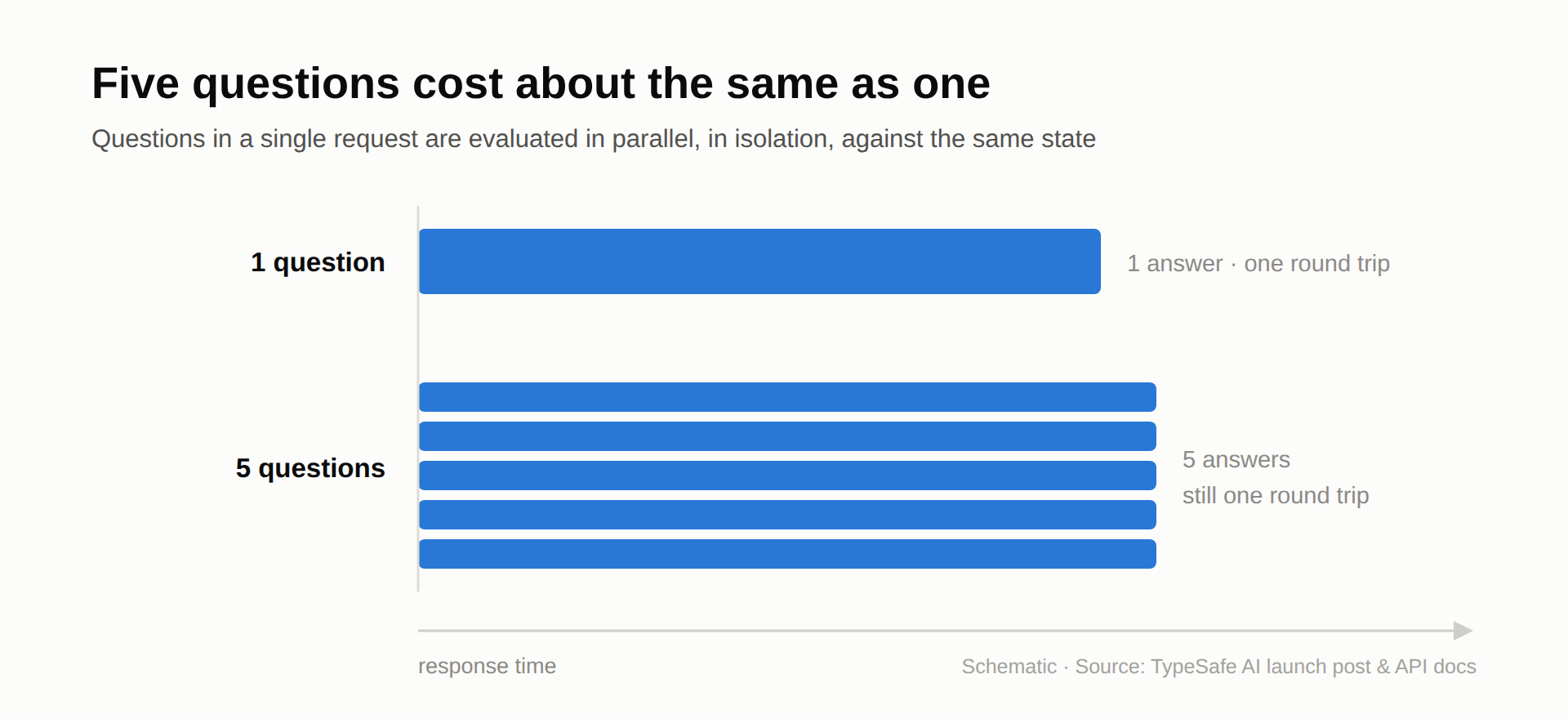
The part that changes how you design systems: questions in a single request are evaluated in parallel, in isolation, against the same state. Adding a fourth and fifth question barely moves the response time. So the idiomatic pattern isn’t one clever mega-prompt — it’s decomposing a judgement into several narrow questions and recombining them in your own code, where you can actually test them.
How it works underneath is mostly undisclosed — a new architecture, a parallel sampler, and a training method TypeSafe calls RLCD, none of it published. Almeida says they generate all their own training data, a bet he rates “better than RLHF”; the launch FAQ asks where that data comes from and never answers.
The numbers everyone is quoting
The cleanest third-party measurement comes from ably-labs/jev-pong — an Ably Labs community demo, not a TypeSafe benchmark — where a Pong ball advances exactly one step per model decision, so decision latency literally becomes ball speed. Recorded September 17, 2026, 45 seconds per lane, run through Vercel AI Gateway:
| Model | Decisions/sec | Average | p95 | Decisions in 12s |
|---|---|---|---|---|
| Jev | 4.4 | 227 ms | 400 ms | 47 |
| Gemini 3.8 Flash | 0.32 | 3.2 s | 7.4 s | 3 |
| Claude Haiku 4.5 | 0.40 | 2.5 s | 8.4 s | 2 |
| GPT-5.6 Sol | 0.28 | 3.5 s | 10.4 s | 2 |
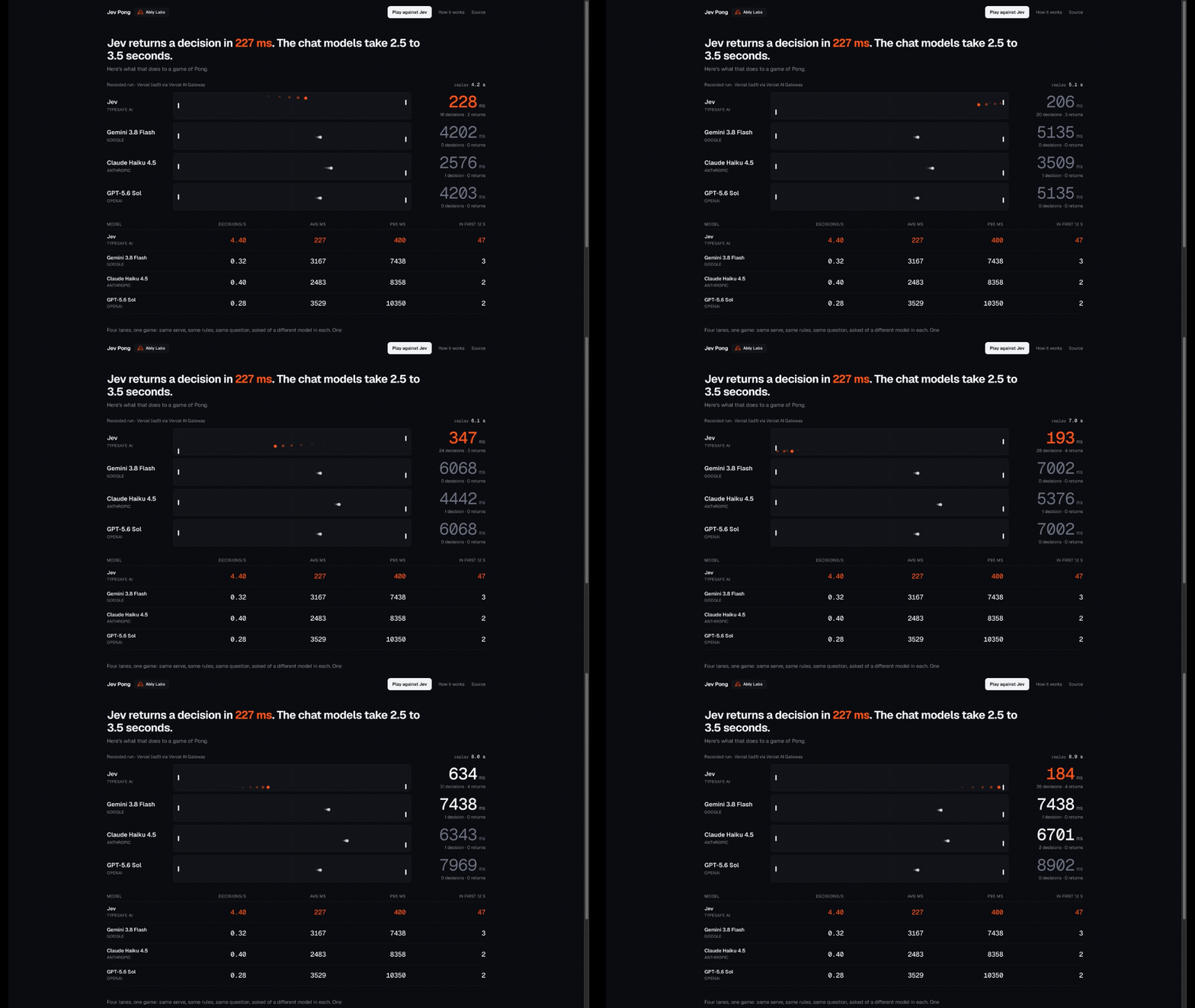
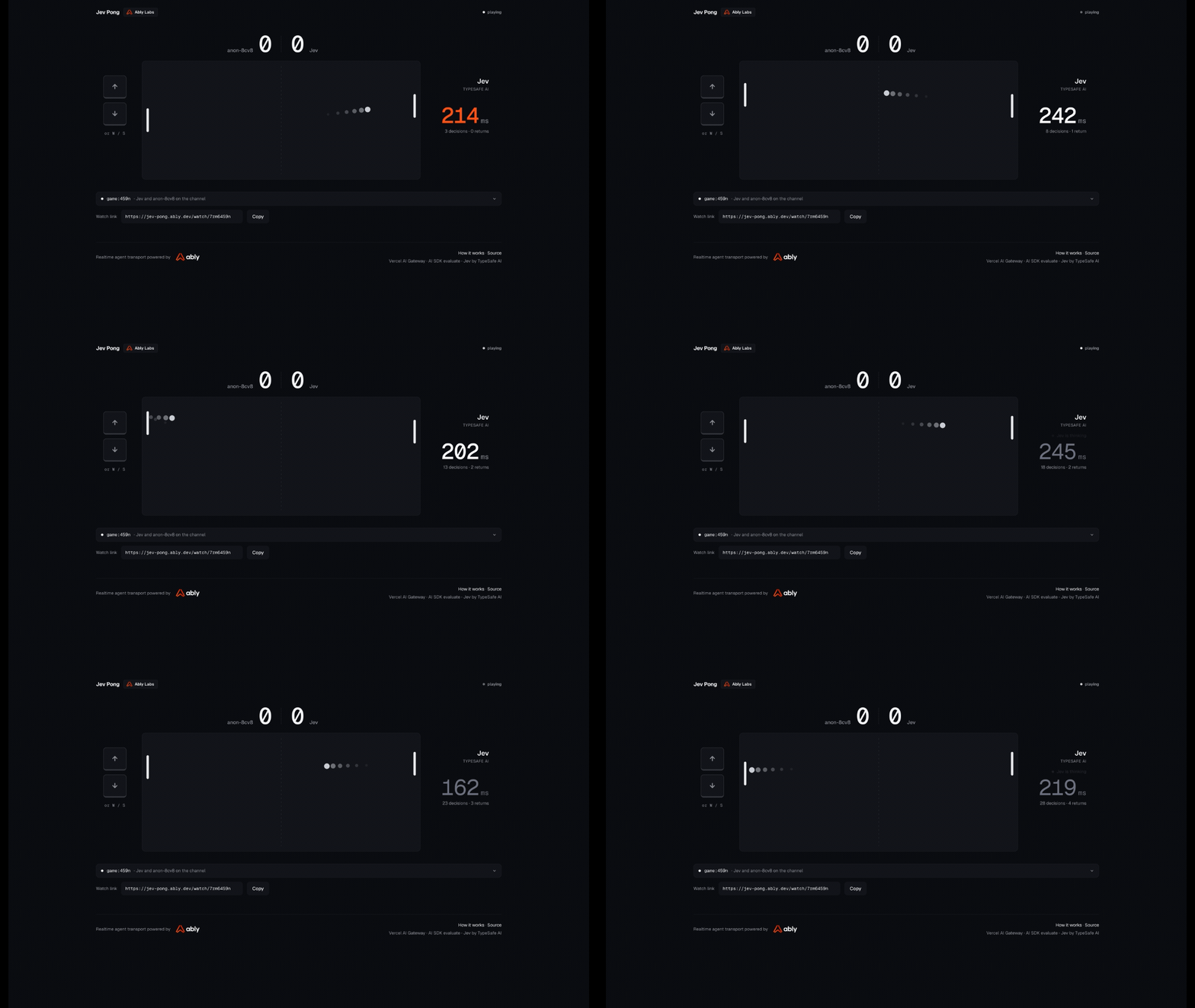
Ably Labs has that demo running publicly at jev-pong.ably.dev — four lanes racing side by side, with a live panel showing decisions/sec, average, p95 and first-response time. There is also a “Play against Jev” button, which is the fastest way to feel what 227ms versus 3.2s actually means.
On pricing, TypeSafe charges $42 per billion input tokens — $0.042 per million — and output tokens are free, described in the launch post as “too cheap to meter.” That’s possible because the output is a handful of floats, not a paragraph. The company’s own workflow evals claim 193.6x faster and 444.6x cheaper, with an end-to-end range of 70–500ms.
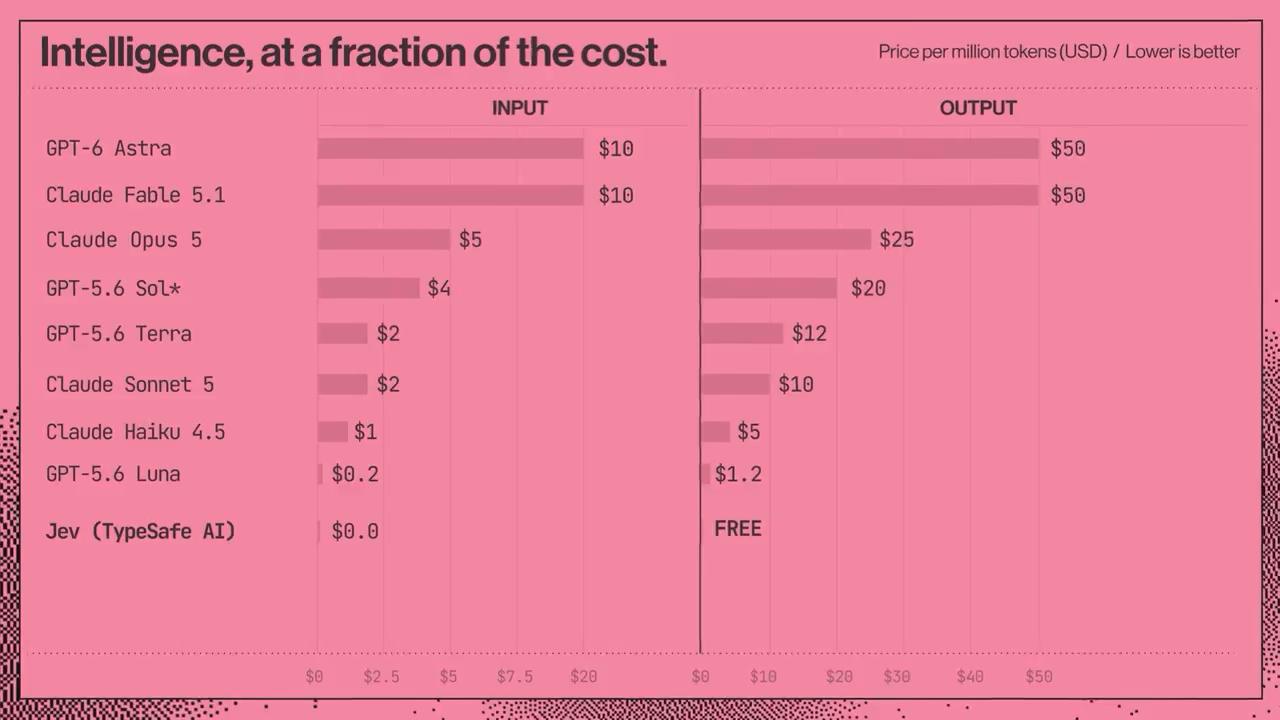
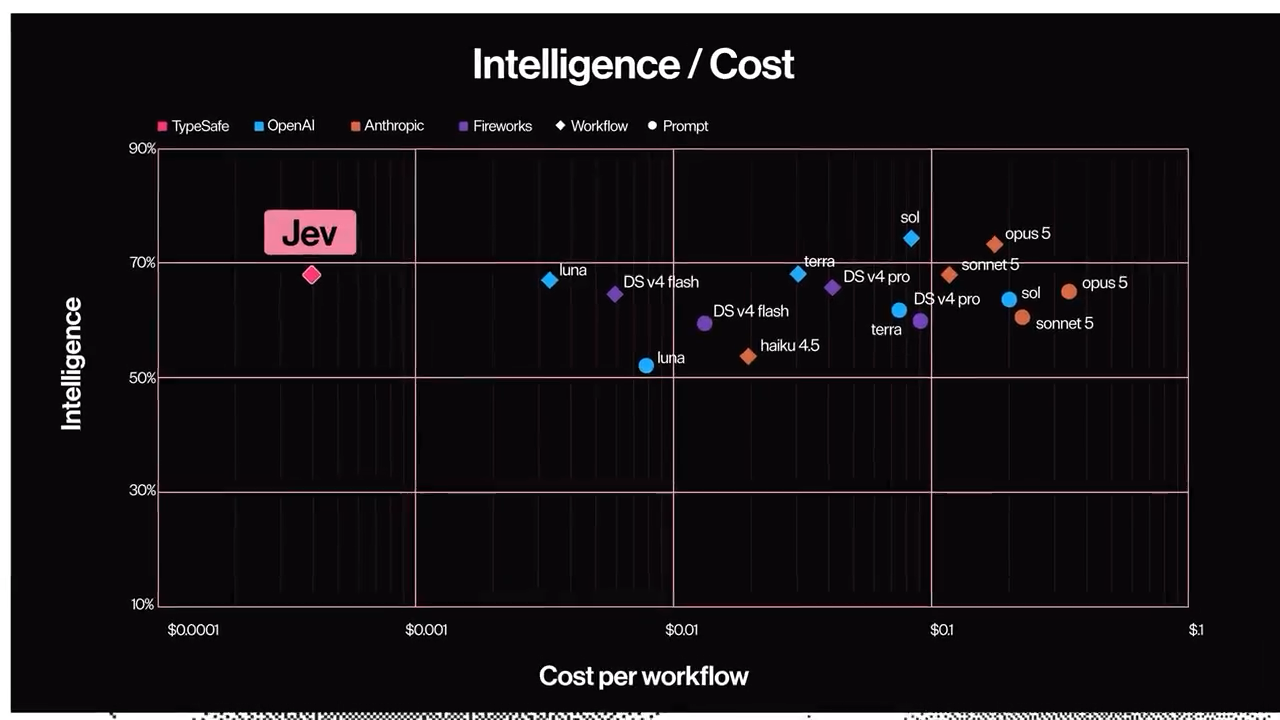
Those last two figures deserve a flag, and to TypeSafe’s credit the company raises it first. The eval workflows were “made by individuals on our model capabilities team, so some bias could exist,” the reference models bias grading “towards OpenAI and Anthropic’s models,” and the results sit “on the higher end of real world gains.” The launch post’s separate, narrower claim for individual System One queries is 40x–200x faster.
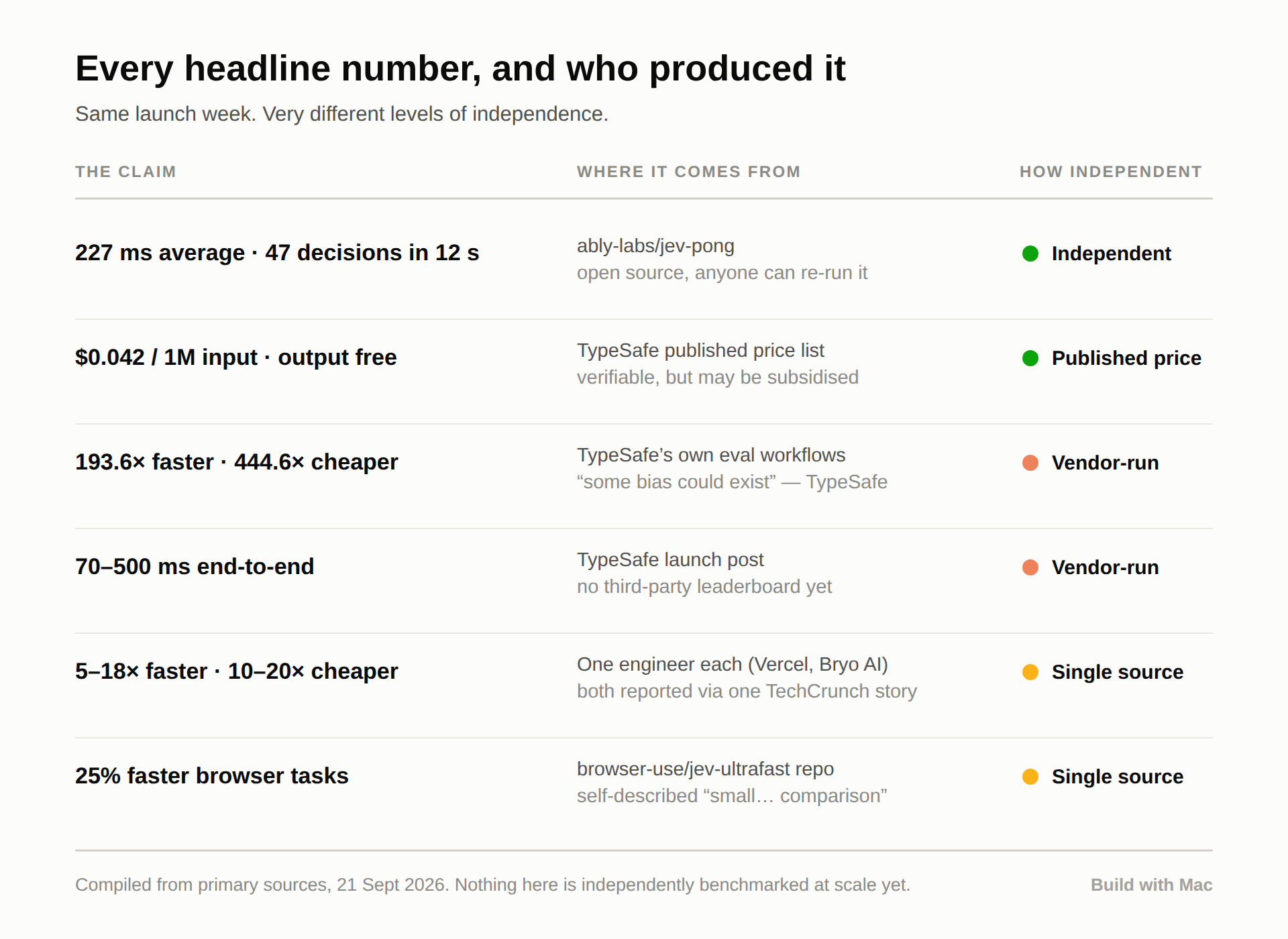
One more caution on model names, since the coverage has been sloppy about it: TypeSafe’s own evals benchmark against GPT-6 Astra and Fable 5.1, the Pong demo uses GPT-5.6 Sol, and Vercel’s internal test used ChatGPT Luna 5.6. Three different baselines, three different numbers.
The sharpest outside critique came on Hacker News — 70ms against several seconds isn’t apples-to-apples if the LLM baseline is doing full chain-of-thought generation to reach the same answer. That’s fair. It’s also somewhat beside the point: if your product only ever needed the answer, you were paying for the chain of thought anyway.
What people are actually shipping
This is the part that convinced me it isn’t just a benchmark toy.
Vercel reported Jev as the fastest-adopted model in AI Gateway history — nearly 13% of paid teams inside 24 hours, roughly 2x the GPT-5.6 family and 6x Fable 5.1. Separately, Vercel software engineer Pranit Sharma told TechCrunch that swapping ChatGPT Luna 5.6 for Jev in a command-safety classifier ran 5–18x faster with better accuracy.
Browser Use open-sourced jev-ultrafast, a browser agent that makes one Jev call per step — it picks the action and the element to act on in a single request, and only falls back to a small LLM when text actually has to be typed. Median task time dropped from 9.45s to 7.09s, and browser protocol calls collapsed from 1,092 to 101. The repo is candid that this is “a small controlled-input comparison, not a broad agent benchmark.”

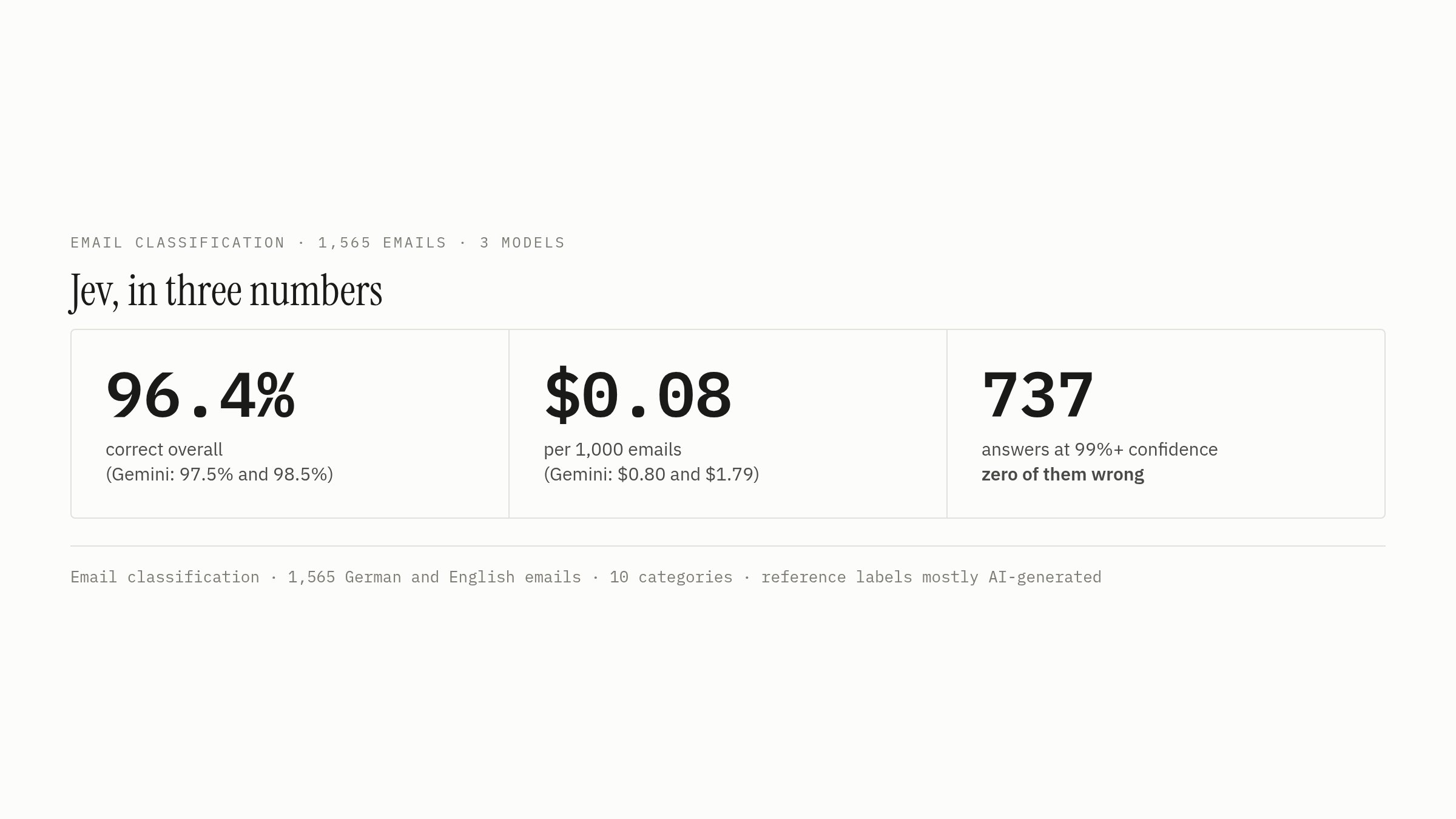
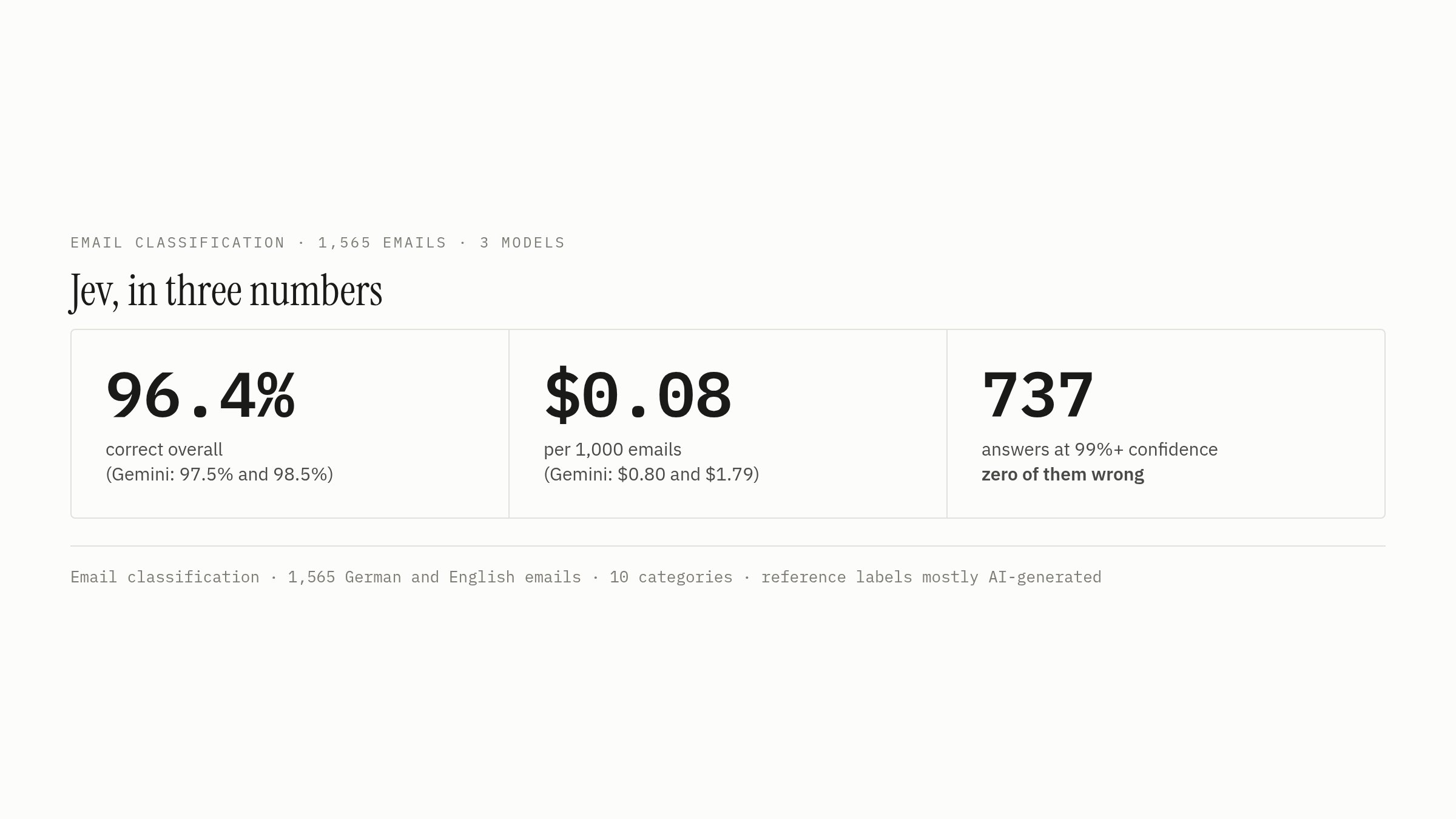
Nikhil Mudholkar of Bryo AI ran 1,565 German and English business emails across 10 categories against Gemini. Gemini came out marginally more accurate — but Jev 10–20x cheaper, with confidence scores good enough to automate on.
Armin Ronacher, co-founder of Earendil, pointed at model routing: predicting whether a task needs the expensive model is valuable, but doing that prediction with an expensive model defeats the purpose. He also named the real tradeoff in one line:
“At the end of the day, it delegates the hallucination problem a little bit to the user.”
That’s a design decision, not a flaw. You get the distribution; you own where the threshold goes.
Where I’d put it first
Those are companies swapping a component. The four places I’d reach for it first all come out of one pattern — and two weekend builds show that pattern better than any benchmark does.
Ben Jang, founder of GOM, wired a local LLM to Jev and pointed it at Google Maps — the local model handles the task, Jev decides each click. His framing is the cleanest statement of the pattern I’ve seen:
“You don’t need a huge frontier model reasoning over every tiny browser action. The local model handles the broader task. Jev handles the fast decisions … Big models for the hard stuff. Small, specialised models for the hundreds of tiny decisions in between.”
Nailthy Tang built the same idea into a wardrobe. In an experiment for Drape, you talk; Jev reads the transcript plus what you’re currently wearing, picks from your closet, and changes the outfit in real time. Measured cost: $0.0011 per decision, roughly 620ms per decision.
Sit with those two numbers, because both are well above the headline 227ms and “too cheap to meter.” A live transcript plus a 60-item wardrobe is a much fatter state than a Pong board’s 125 bytes. Jev is still fast and still cheap here — just budget from your own payload, not from the launch post.
https://x.com/nailthy62/status/2101388186916454439
And the sharpest reply under that demo is the check on all of this — roughly: “Jev is good, but plenty of people are going to take things a few if-elses and a random() already handled and do them with a model just because they can. And sure enough, here we are.”
Fair. Which is why the four places I’d actually reach for it all share one property: a judgement call that an if-else genuinely cannot express.
The first is every classifier you’re currently running on a chat model — intent routing, spam and abuse triage, sentiment, priority scoring. These are Choice and Score questions wearing a costume, and you are almost certainly overpaying by two orders of magnitude.
The second is guardrails on agent tool calls. A Noul question — “is this command destructive?” — at 200ms is cheap enough to run before every tool execution, which is a thing you simply cannot afford at three seconds and a cent a call. LangChain already ships this pattern as AutoModeMiddleware.
The third is context compression. Scoring a thousand candidate chunks for relevance in parallel and keeping the top slice is a better filter than a cosine similarity score, at a fraction of the cost of asking a large model to read everything.
The fourth is evals, which Langfuse moved on immediately. LLM-as-judge is expensive and notoriously uncalibrated. A Score question with explicit ordered levels and a real confidence value is closer to what you wanted from a judge in the first place.
The common thread: none of these need a sentence. They need a decision your code can branch on.
The fine print
Against the hype, here is what will actually bite you.
“Zero hallucinations” means schema validity, not correctness. The 0% figure isn’t empirical — it’s a statement that output will always conform to the type you defined. Because these models are still probabilistic, they can be confidently wrong inside a valid schema. A Choice can only return one of your 255 options; nothing guarantees it returns the right one. Treat the confidence score as the actual product, and set thresholds accordingly.
The most instructive thing anyone published in launch week is a failure. A developer posting as Moon built a fully autonomous Jev trading bot in “an evening and morning,” taking a side on MON/USDC every Monad block. His own summary, on a post now past 1.3M views: “So far it has lost me $31,680.”
The model isn’t what failed. His standing order reads: “buy or sell MON/USDC on Kuru. every block. no abstaining.” Jev answered 67% buy / 33% sell — a calibrated, honest way of saying there is almost no signal here — and the harness converted that shrug into a trade, 1,846 times, at around 100ms each. That is Ronacher’s tradeoff with a dollar figure attached: the probability was the product, and forcing a decision at 67% threw it away. Speed and calibration don’t manufacture an edge that isn’t there; they just let you be wrong faster and more cheaply per unit. (The open-source jev-trader this builds on dry-runs by default — with no private key you get real decisions and simulated fills.)
32K context, text only. The docs are explicit: “Images, audio, and video are not supported (yet).” That rules out a large slice of screen-understanding and document work.
Treat the price as provisional. TypeSafe’s own wording is that it “can’t prove it isn’t subsidized,” the architecture is unpublished, and no third-party leaderboard has placed it yet. Build a cost model that survives a 5x increase.
Why the name is the whole thesis
Jev is named for William Stanley Jevons, the 19th-century economist who observed that making coal more efficient led to burning more of it, not less. Falling unit cost expands total use.
Almeida is betting the same thing happens to intelligence. At $0.042 per million input tokens and 200ms, you stop rationing model calls — and you start putting judgement in places where it was never worth a network round trip and a cent. Not one giant agent that does everything, but thousands of tiny decisions scattered through ordinary software. Closer, as he puts it, to the early internet than to the mega-apps everyone is currently trying to build.
“The main product of frontier labs is fear or hype. I would like our main product to be intelligence.” — Diogo Almeida
One last thing about the label. Calling something a “frontier model” when it cannot hold a conversation borrows credibility from a category it hasn’t competed in. Jev is extremely good at a narrow thing — that’s the pitch, and it’s a strong one. It doesn’t need the frontier badge.
Whether TypeSafe’s numbers survive independent scrutiny is genuinely still open. What seems less open is the shape of the idea. A lot of what we currently call AI features are one if statement wearing a very expensive coat. Jev is the first model built on the assumption that the coat was the problem.
The model said less. The software did more.
Try it yourself
You don’t need an API key for any of these. They run in the browser.
- Jev Pong — the latency benchmark above, as a live race. Ball speed is decision speed.
- Jev Pac-Man — maze navigation from structured state, no screenshots or pathfinding. Slow it to 0.25x and you can watch each individual Choice get made.
- Jev Tetris — the Choice primitive picking rotation and column, every move.
- Jev Trader — on-chain decisions inside a 300ms block window.
- Jev Guard — comment moderation, the closest public demo to the tool-call guardrail pattern above.
- Smart Home — TypeSafe’s own interactive walkthrough. Two more worth bookmarking: TypeSafe publishes its full eval methodology and charts at evals.typesafe.ai — useful precisely because you can inspect the workflows it graded itself on. And madewithjev.com indexes 143 open-source projects built in the first week, which is a better signal of where this lands than any benchmark.
Sources
- Introducing System One Models & Jev — TypeSafe AI
- TypeSafe AI API reference
- A new kind of AI model from a ChatGPT inventor is thrilling developers — TechCrunch
- TypeSafe AI debuts model for machines that plays Doom — The Register
- TypeSafe AI Emerges From Stealth With $40M in Funding — AIwire
- ably-labs/jev-pong — GitHub
- browser-use/jev-ultrafast — GitHub
- Building a harness with Jev — LangChain
- Jev (typesafe) — Cloudflare AI docs
- Using TypeSafe’s Jev for evals — Langfuse
- TypeSafe AI Releases Jev — MarkTechPost
- Is the 200x Faster Decision Model Too Good to Be True? — Flowtivity
- TypeSafe AI’s Decision Model Jev Becomes Vercel’s Fastest Adopted Launch — Startup Fortune